One Platform. Stronger Schools.
Reorienting a market leader as the Connected Operating System for education
PowerSchool is the leading provider of cloud-based software for K–12, connecting educators, administrators, students, and families with the tools to keep education on track. In a consolidating edtech market with new entrants and disruptive point solutions, PowerSchool’s brand needed to keep pace with the scale and sophistication of its offerings. MBLM was engaged to help reintroduce the brand to the market in just four months to fuel aggressive growth for 2026.
Challenge
PowerSchool delivered the most comprehensive K–12 software suite on the market, but its brand told a fragmented story. Generic value messaging blurred differentiation, products were communicated in silos, and the cross-selling potential of a true platform approach was invisible to buyers. Internally, the team lacked a unifying rallying cry: something simple enough to anchor a sales call yet expansive enough to communicate a platform strategy. The website reinforced this problem—dated, siloed, and organized around a product model the company was ready to leave behind.
Solution
MBLM’s approach intertwined strategy, design, and digital experience and unified them under a single organizing concept: “The K–12 Connected Operating System.” Audits and AI language analysis revealed that competitors tried to claim the benefits of a connected product ecosystem, without credibility. MBLM advised PowerSchool through the process of reorganizing its product portfolio into a clearer persona- and need-based solution matrix, and recommended categorical identifiers instead of branded names. MBLM also helped map the platform’s cross-product value at every moment and worked with the client to surface proof points for each integration.
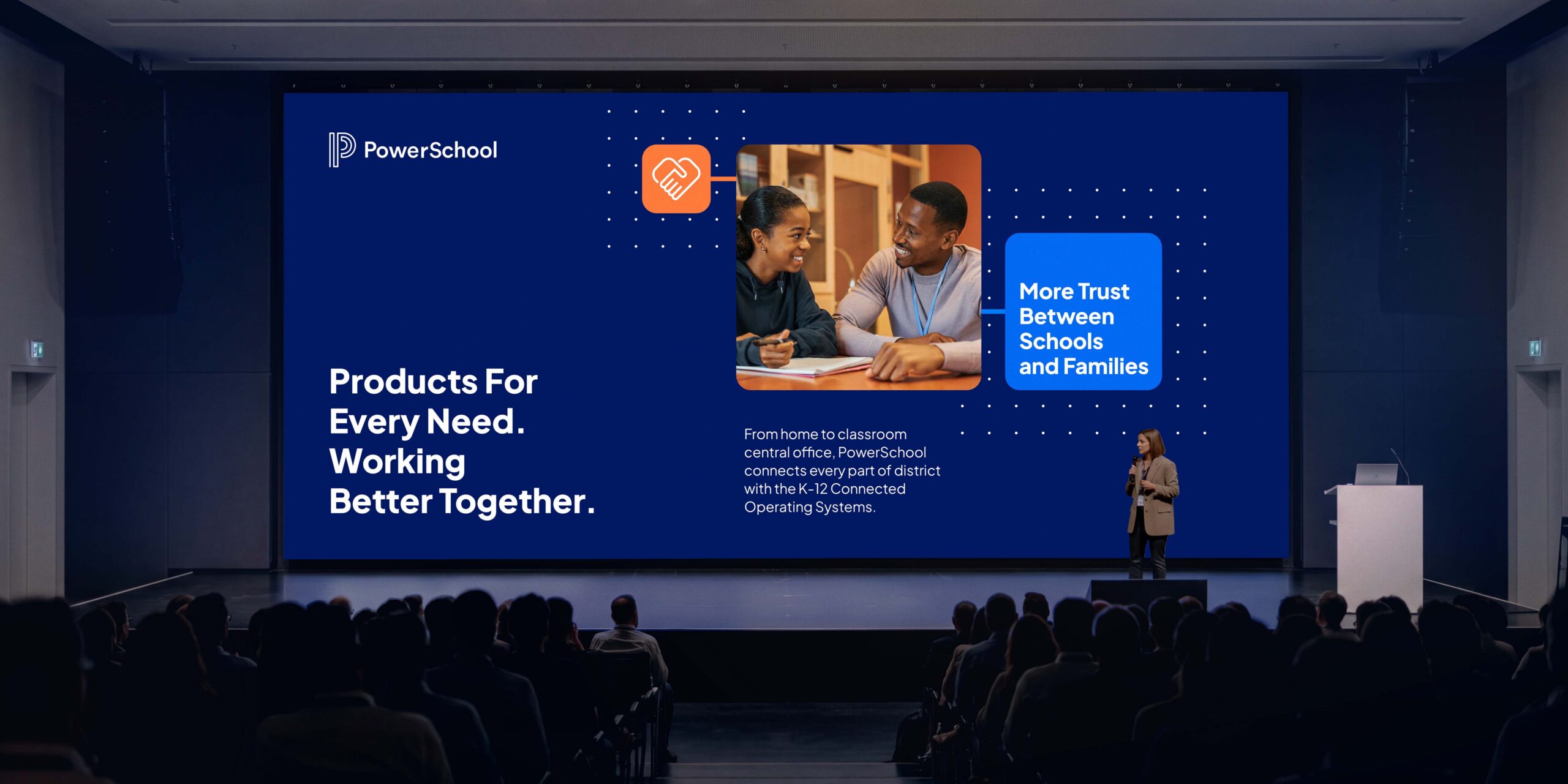
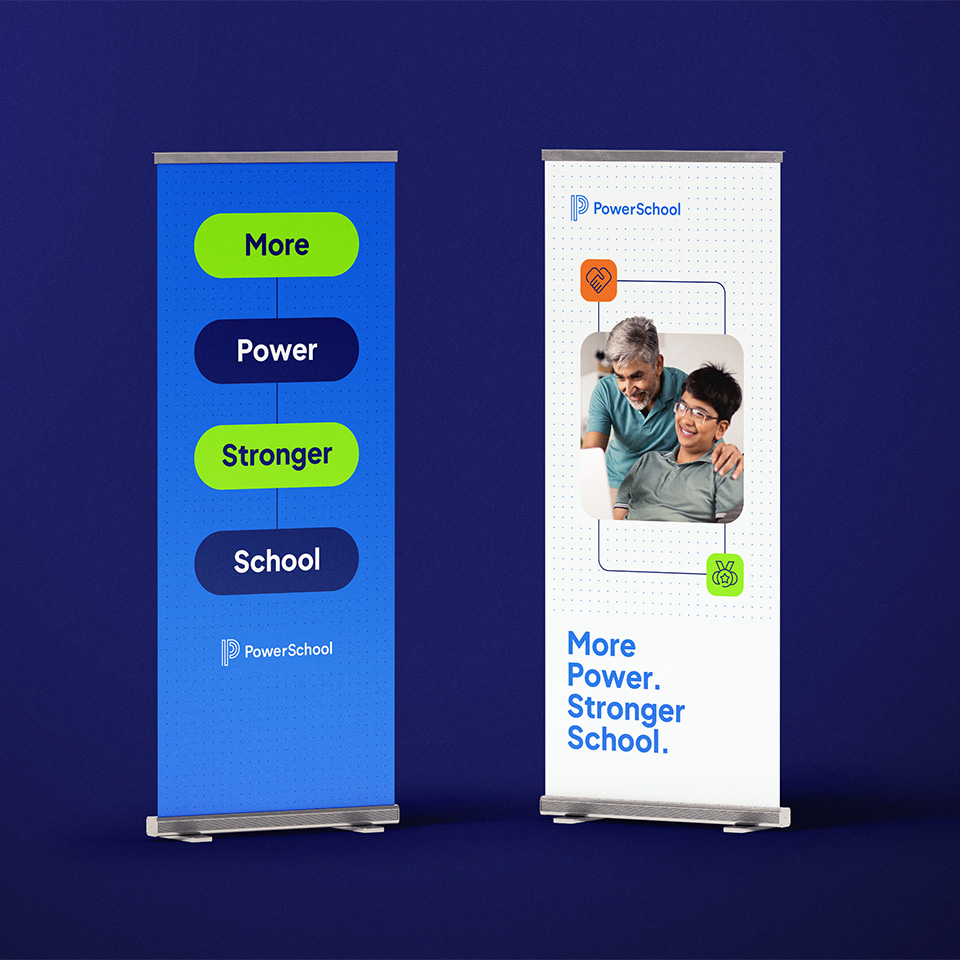
Leveraging this new portfolio view, MBLM created an emotive rallying cry for the brand: “More Power. Stronger School.” and named the platform “The K–12 Connected Operating System.” This positioning leveraged the Brand Intimacy archetypes of fulfillment and enhancement. It elevated PowerSchool into a higher-order offering, gave the brand an impactful idea to lead with, and created a clear, evidence-based story to cross-sell into the platform.
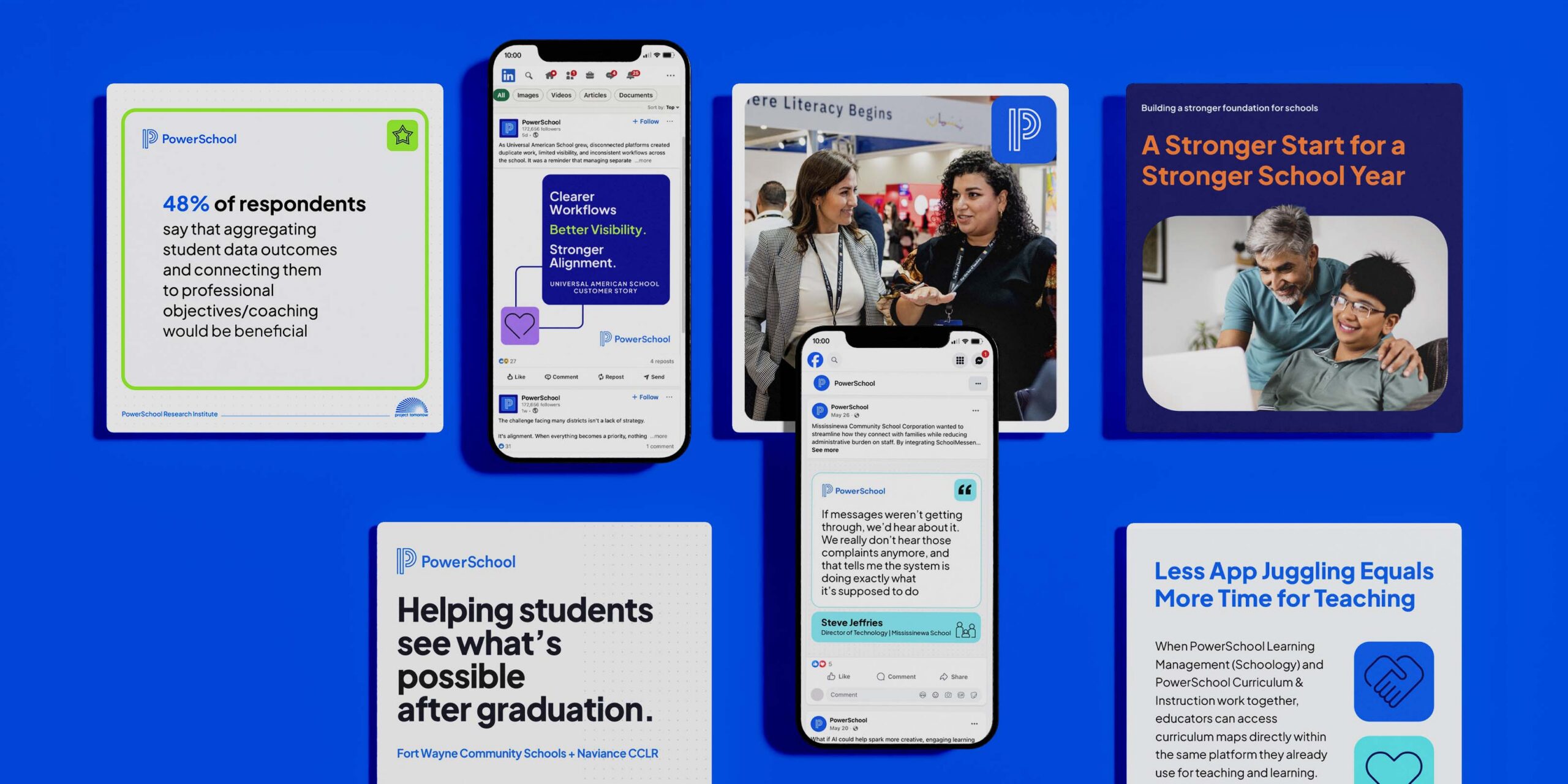
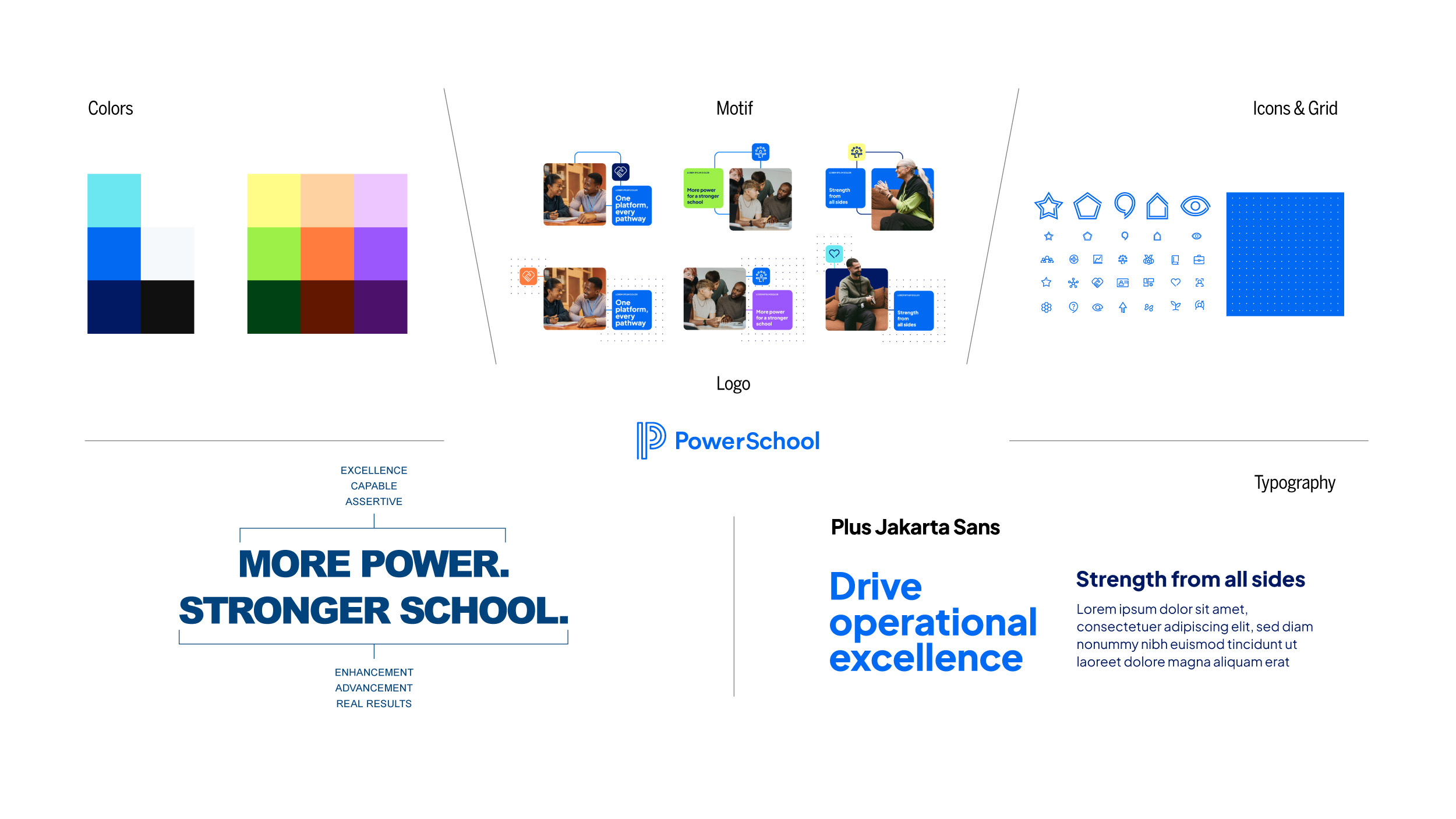
The new design system supported the rallying cry: modular, scalable, and connective. A stylized grid used logic that mirrored the product architecture, with modules that plug in and power up. The more products that joined the grid, the more powerful customers became. MBLM introduced bold dynamic typography, an electric palette, and a library of AI-generated characters refined through extensive prompt iteration and postproduction.
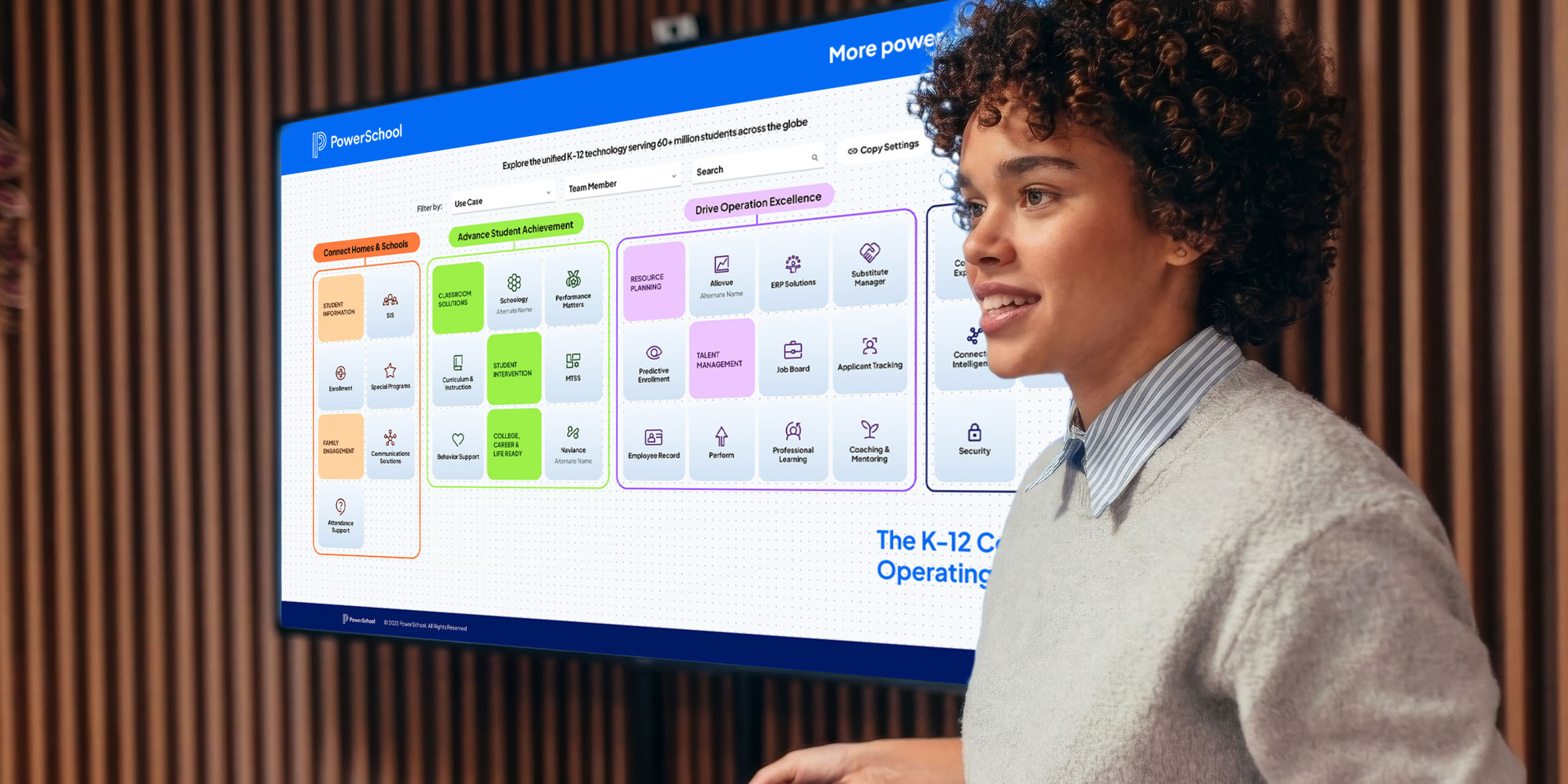
At the center of the design system was a visualization of the K–12 Connected Operating System that brought its interconnected nature to life: a modular diagram of the platform and its audiences. This visual became a key sales tool, brand asset, and the core of a transformative web experience.
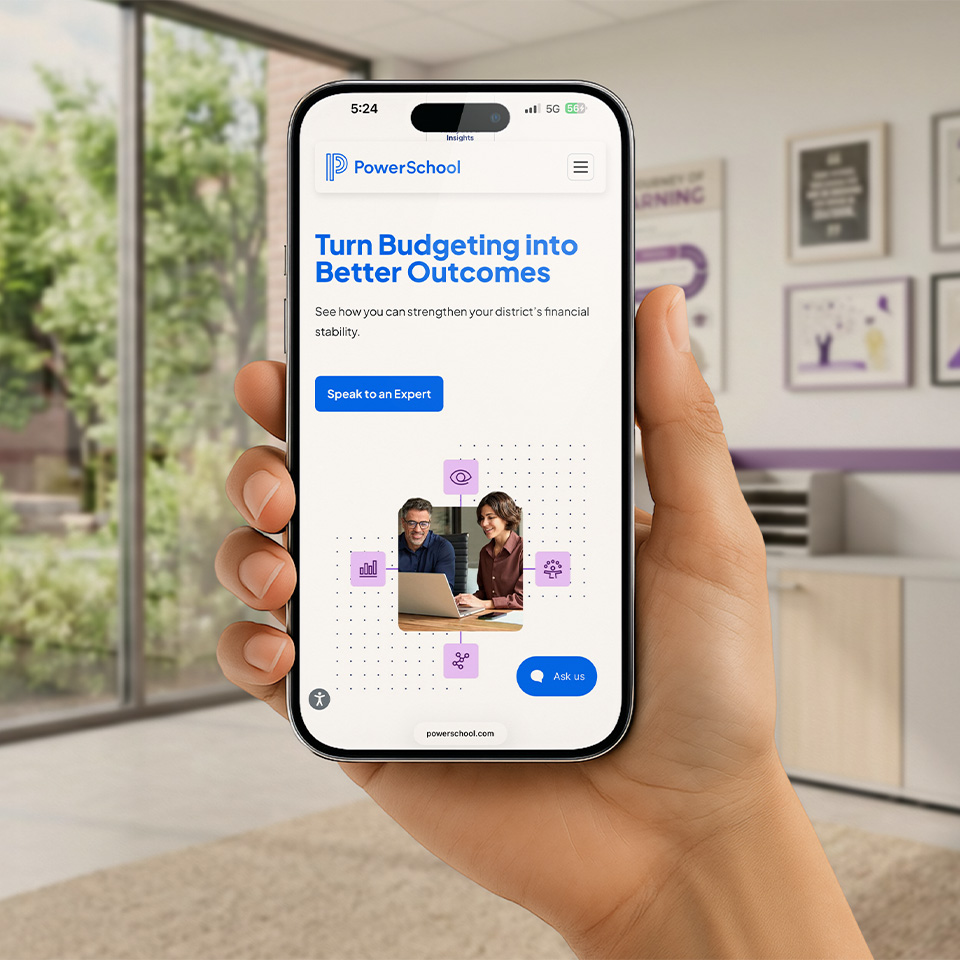
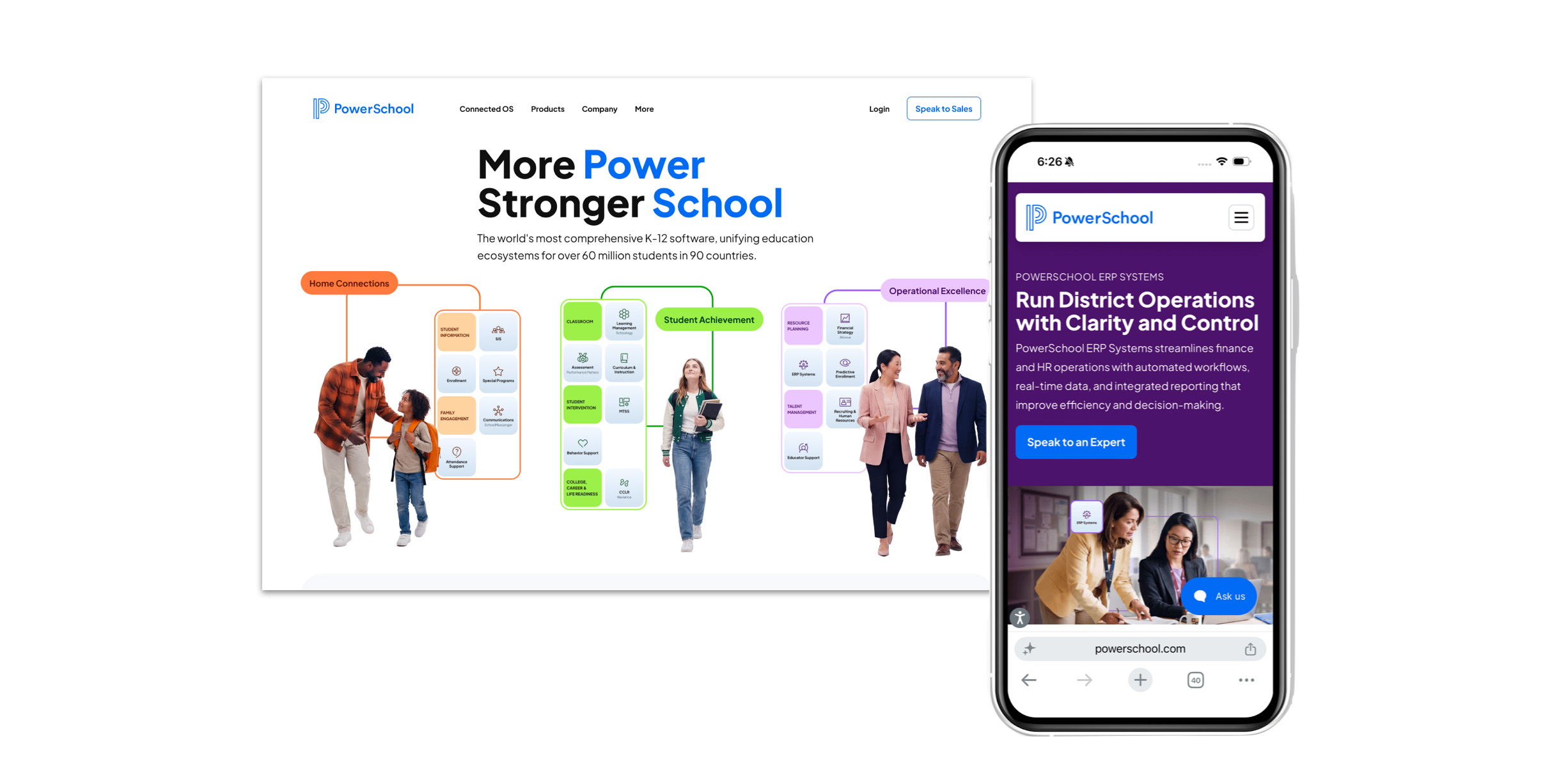
MBLM rebuilt the website, with a new information architecture that placed the Connected Operating System at the center of the user journey. This product configuration tool let visitors walk through the platform’s every group, product, and integration, with a “favorites” function that moved users naturally toward conversion. Intuitive interaction paradigms and expressive animations created moments of delight and emotional impact, while also aiding navigability. Persona-matched imagery helped audiences see themselves in every step.
The site exemplified the design system: larger, editorial moments led by evocative photography, and a visual language that communicates scale and confidence. Programming also tackled significant complexity: the approach protected the site’s SEO equity with minimal redirects and a content-managed architecture that scales.
Results
The new PowerSchool brand went live across 1,800 pages, serving 28 million active users. In the year following the refresh, active users grew 21% year over year. PowerSchool entered the 2026 sales cycle with a brand that finally matched the scale and professionalism of its business and a product portfolio approach that was memorable, differentiated, and grounded in reality.